

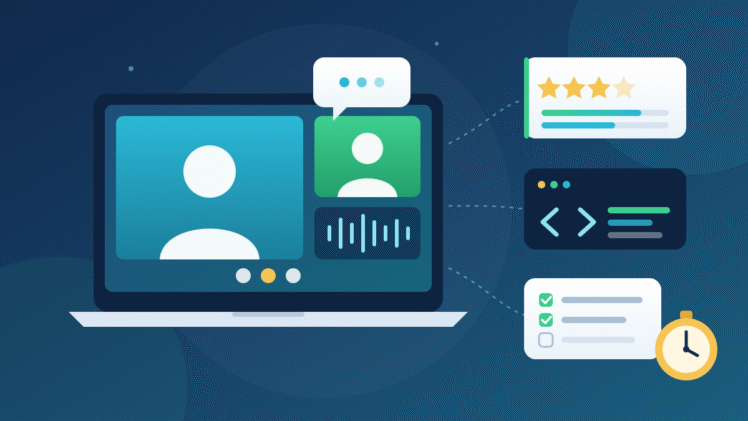
Most people don’t lose interviews because they lack ability. They lose them because they have never said their answers out loud, never solved a problem while someone watches, or walked in knowing little about how the company hires. Interview preparation platforms exist to close those gaps.
This guide explains the main types, profiles well-known platforms based on what their official pages say today, and gives you a practical plan to use them without wasting time or money.
Note: This article is based on each platform’s official website and help pages as of 11 November 2026. It does not include hands-on testing or paid rankings. Features, free limits, and prices change often, so check each official site before you sign up or pay. No platform can guarantee a job offer.
The five main types of interview prep platforms
- AI mock interviewers. You answer questions by voice, video, or text and get instant automated feedback on structure, clarity, pace, or filler words.
- Peer practice. You are matched with another candidate and take turns interviewing each other. Playing the interviewer also teaches you what good answers look like.
- Coding and technical platforms. Problem libraries, study plans, and timed assessments for software, data, and other technical roles.
- Company-research and question sites. Candidate-reported interview questions and experiences, plus employee reviews.
- Coaching and mentoring marketplaces. Paid or free sessions with experienced professionals who give human feedback tailored to your field and level.
Most job seekers do best by combining two or three types rather than relying on one.
Well-known platforms worth knowing
Aced (formerly Exponent): all-in-one prep for tech, product, and beyond
Aced is the new name of Exponent, announced on the company’s own blog. It offers video courses, questions from real interviews by company and role, an AI mock interviewer scored against rubrics, peer mock interviews, company interview guides, and bookable sessions with coaches. Its homepage describes a free tier with sample lessons and a paid membership. It focuses on product, engineering, data, and machine learning roles and is expanding into finance.
Pramp (now Aced Practice): free peer mock interviews
Pramp is now part of the Aced family and is branded as Aced Practice. According to its site, you choose a time and topic, get paired with a peer, and interview each other for 30–45 minutes over video in a shared environment, then swap feedback. The site describes the service as free.
interviewing.io: anonymous mocks with senior engineers
interviewing.io offers anonymous technical mock interviews with senior, staff, or principal engineers, covering coding, system design, machine learning, front-end, behavioral, and management interviews. Sessions use audio and a shared coding pad, with no video, and end with detailed written feedback. The site also lists an AI interviewer for coding and system design practice. Human sessions are paid; check current pricing on the site.
LeetCode: the standard coding problem library
LeetCode’s study plans, such as “LeetCode 75” and “Top Interview 150,” give structure to a large library of coding problems. The Premium page lists company-specific question filters, timed interview simulations, and debugging tools. Free problems go a long way; Premium matters most for a specific company’s coding rounds.
HackerRank: practice in a familiar assessment environment
Many employers use HackerRank to run coding tests and technical interviews. For candidates, its free Interview Preparation Kit groups practice problems by topic, such as hashmaps, string manipulation, greedy algorithms, and dynamic programming. Practicing there helps you get comfortable with an interface you may meet in a real assessment.
Big Interview: structured lessons plus video AI practice
Big Interview combines video lessons, an answer builder, and recorded video practice with AI feedback on content and delivery. It serves individuals as well as career centers, universities, and workforce agencies, so check whether your school or local employment program already provides free access. Individual plans are paid; see the official pricing page.
Yoodli: AI roleplay for interviews and other conversations
Yoodli’s interview practice lets you rehearse with a realistic AI interviewer that asks follow-up questions, then gives feedback on structure, clarity, conciseness, pacing, and filler words. Its interview page says individuals can start for free.
LinkedIn AI interview prep: practice for jobs you are viewing
LinkedIn’s older Interview Preparation section has been retired. Its current AI interview prep is a Premium feature, gradually rolling out in English, that generates role-specific mock interviews from real LinkedIn job descriptions. You can answer out loud or by typing. You then get a low/medium/high readiness score, strengths and areas to improve, and a transcript.
Glassdoor: candidate-reported interview questions
Glassdoor’s interview section lets you search questions and experiences shared by people who interviewed at a company, alongside employee reviews and salary data. Treat it as research, not a script: reports are individual experiences and may be dated, but they reveal common rounds and themes.
ADPList: free-to-start mentoring across 160+ countries
ADPList is a mentoring platform where you book one-to-one video sessions with professionals in design, product, engineering, marketing, data, and more. The site says it is free to start, with free sessions available, and connects people across more than 160 countries. Useful for a human mock interview in your target field.
A note on Google Interview Warmup
Google Interview Warmup, a popular free practice tool, has been retired. Google’s Skills site states that it decided “to retire Interview Warmup,” and the old address now redirects to a Grow with Google interview-tips article. That article suggests using Gemini Live for conversational practice instead.
How to choose the right platform
- Match the interview format. Coding rounds need a coding platform. Behavioral and competency interviews need spoken practice. Case or product interviews benefit from rubric-based mocks.
- Match your level. Graduates gain from structured lessons and peer practice; senior candidates from expert feedback.
- Check your time zone and language. For peer and coaching platforms, confirm that sessions are available at hours that work for you and in the language you will interview in.
- Look for free access first. Universities, bootcamps, and public employment programs often license tools like Big Interview or Yoodli.
- Read the billing terms. Confirm trial length, renewal, and cancellation rules on the official site before you enter card details.
A practical four-week prep plan
- Week 1: Research and stories. Read the job description closely and list the three to five skills it stresses. Check company interview reports on Glassdoor. Write five to seven short STAR stories (Situation, Task, Action, Result) that prove those skills.
- Week 2: Say it out loud. Do short daily sessions with an AI interviewer such as Yoodli, Aced, or LinkedIn’s Premium tool. Focus on one fix at a time: shorter answers, clearer results, fewer filler words. Technical candidates should also start a study plan on LeetCode or HackerRank.
- Week 3: Practice with people. Book at least two live mocks: a free peer session on Pramp/Aced Practice, a mentor on ADPList, or a paid expert session on interviewing.io or Aced.
- Week 4: Simulate the real thing. Run full-length mocks under realistic conditions: timed, on camera, in the same setup you will use. Review your weakest answers.
Have less time? Squeeze the plan into a few days: research, three stories, one AI session, and one live mock. Make sure your resume tells the same story you will tell in the room. Our guide to resume builders for every career stage can help. If you are applying across borders, see our list of remote job boards for international opportunities.
Privacy and AI-feedback caveats
- Know what is recorded. Voice and video practice creates recordings and transcripts. Read each platform’s privacy policy to see how long data is kept, whether it is used to train models, and how to delete it.
- Do not share confidential details. Leave out employer secrets, client names, and personal data about colleagues when you practice stories.
- Treat AI scores as guidance. An AI readiness score or rubric is a practice signal, not a prediction of how a real interviewer will judge you. AI can misread accents or reward polish over substance.
- Keep it honest. Use AI to sharpen your own experiences, not to invent achievements. Follow each employer’s rules on AI use during live interviews and assessments.
- Be wary of guarantees. Treat any service that promises a job offer with caution.
FAQ
Are there free interview preparation platforms?
Yes. Pramp (Aced Practice) describes free peer practice, ADPList is free to start, LeetCode and HackerRank have free problems, and Yoodli lets individuals start free. Limits vary, so check each site.
Is AI practice as good as a human mock interview?
It is good for volume and quick feedback on delivery. Human interviewers are better at judging depth, follow-up reasoning, and fit. Use both.
Which platform is best for non-technical roles?
Spoken-practice tools such as Big Interview, Yoodli, or LinkedIn’s AI interview prep, combined with company research on Glassdoor and a mentor session, suit most non-technical roles.
How many mock interviews should I do?
There is no magic number. Keep practicing until your key stories feel natural, not memorized, and you can handle unexpected follow-ups calmly.
Bottom line
The best interview preparation platform is the one that matches your interview format, level, and budget, and that you will actually use. Research the employer, practice out loud with AI, test yourself with real people, and rehearse the full interview at least once. Preparation will not guarantee an offer, but it gives you the best chance to show what you can do.