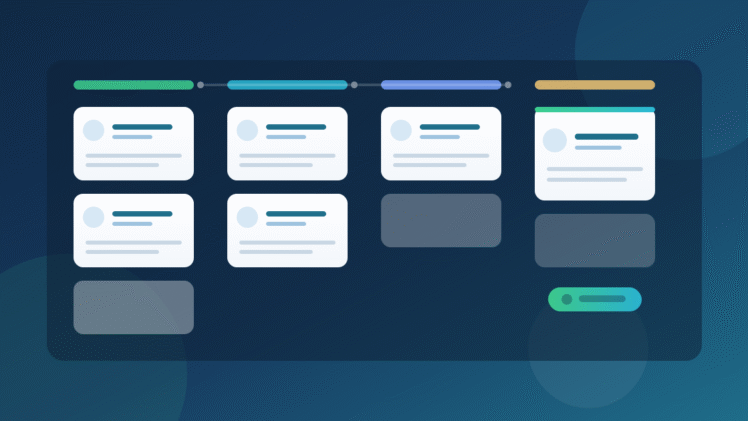
Hiring for a small business rarely looks like a dedicated recruiting department. More often it is a founder, office manager, or one overloaded HR generalist juggling job posts, inbox threads, interview calendars, and “where did we leave that résumé?” moments. An applicant tracking system (ATS) is meant to replace that scramble with one shared pipeline—from posting a role to making an offer.
Small teams usually need clarity more than complexity: a careers page, multi-board posting, a visible candidate pipeline, interview scheduling, scorecards or feedback, and a clean handoff into onboarding or HR records. This guide covers seven platforms that publicly position themselves for small or growing businesses, based on what their official product and pricing pages currently describe.
Disclaimer: This article is not hands-on product testing and is not a paid ranking. Features, plan limits, and published prices change often—confirm details on each vendor’s website (and in a demo or trial) before you buy. Pricing mentions below are soft and attributed to official pages as of the research date.
What to evaluate before you pick an ATS
Before comparing brands, decide which jobs the software must do for your team:
- Hiring volume and open roles. Some plans cap active jobs; others price by employee headcount or by recruiter seat.
- Who will use it. If hiring managers leave feedback, check permissions, mobile access, and scorecard simplicity.
- Sourcing reach. Job-board distribution, a branded careers site, referrals, and whether CRM/sourcing tools are included or add-ons.
- Collaboration and scheduling. Calendar sync, self-scheduling, interview kits, and automated candidate emails save the most time on lean teams.
- Compliance and HR handoff. GDPR/retention tools and a clean path into employee records or your existing HRIS matter even for SMBs.
No ATS guarantees better hires. Structured interviews, clear role criteria, and timely candidate communication still matter more than the logo on the pipeline board.
1. BambooHR — best when hiring should live inside HR
BambooHR’s applicant tracking system sits inside a broader HR platform aimed at small businesses. Official pages describe job posting to major boards, candidate records with ratings and application answers, automated personalized emails, interview self-scheduling, offer letters with e-signatures, searchable talent pools, source and funnel reports, a hiring mobile app, 150+ integrations, new-hire packets, and automatic transfer of hires into employee records.
Published pricing is per employee per month for larger teams, with flat monthly rates for companies of 25 employees or fewer. The ATS appears across Core, Pro, and Elite, with different job-opening allowances by plan. Soft rule of thumb: treat BambooHR as “HR + hiring,” not a pure recruiting suite.
Best fit: small companies that want hiring, employee records, and onboarding in one system.
Watch for: open-job limits by plan, and whether you need deeper CRM/AI sourcing than an HR-centric ATS typically emphasizes—confirm on BambooHR’s current pages.
2. Workable — best all-in-one recruiting ATS with transparent plan cards
Workable markets a recruiting and HR platform with a full ATS in every recruiting plan. Official pages describe distribution to 200+ job boards, a careers page builder, talent CRM, resume parsing, self-scheduled interviews with calendar sync, interview kits and scorecards, offer templates, GDPR automation tools, reporting, and mobile access. AI “Agent” tools are documented (job brief included; sourcing, screening, and engagement agents use AI credits), with optional add-ons such as texting, video interviews, and assessments on lower tiers.
Plan cards (Standard, Premier, Enterprise) scale with employee bands; published starting prices apply to the smallest band, so confirm the band that matches your size. A time-limited free trial is listed on the pricing page.
Best fit: SMBs that want a recruiting-first ATS with optional HR modules and clear published packaging.
Watch for: add-on costs (messaging, video, assessments, AI credits) and headcount-based price changes as you grow.
3. Zoho Recruit — best budget-friendly ATS with a free starting tier
Zoho Recruit targets small recruiting teams and budget-conscious businesses. Official pricing describes a Free edition (one active job per recruiter license) with candidate management, email, and interview scheduling, then paid Standard and Enterprise editions with higher active-job allowances. Paid plans add sourcing, resume management, premium job boards, a branded careers site, referrals, social recruiting, assessments, pipelines, reports, and 50+ integrations; Enterprise adds AI candidate matching, automation tools, advanced analytics, portals, and deeper customization.
Zoho publishes per-recruiter pricing (with currency selectors) plus a trial and money-back window on paid editions. Soft guidance: start with Free if you hire rarely; move to Standard when multiple openings become routine.
Best fit: startups and small teams that want an affordable dedicated ATS, especially if they already use other Zoho apps.
Watch for: active-job limits per license and which AI/automation features sit only on Enterprise.
4. JazzHR — best simple ATS priced for lean small-business teams
JazzHR (part of the Employ family) markets easy recruiting software for small businesses rather than enterprise ATS complexity. Product pages describe applicant tracking, sourcing, interviews and assessments, candidate experience tools, and offers with e-signatures. Pricing lists annual Hero, Plus, and Pro plans; higher tiers add more active jobs, AI candidate matching, structured interviews/assessments, automation, and stronger reporting. Comparison content also highlights workflow stages, knockout questions, resume parsing, email templates, calendar sync, and evaluation templates.
Published annual prices appear on JazzHR’s pricing page. JazzHR notes standard pricing may not apply to staffing agencies, franchises, multi-location businesses, or organizations over a stated employee threshold—confirm eligibility if that describes you.
Best fit: lean HR or ops teams that want a focused SMB ATS with approachable setup.
Watch for: active-job caps on entry plans and whether AI matching/reporting require Plus or Pro.
5. Breezy HR — best flat-rate ATS with unlimited users and positions
Breezy HR publishes Startup, Growth, Business, and custom Pro plans with flat monthly pricing that does not change with headcount. Official copy emphasizes unlimited users and positions on paid plans, a branded career site, distribution to 50+ job boards, resume parsing, automations, questionnaires, interview self-scheduling, email/calendar sync, mobile apps, GDPR tools (including EU data centers for EU/UK customers), analytics, and video interviews. Higher tiers add scorecards, interview guides, referrals, e-signatures, multi-pipeline workflows, offer management, and HRIS/assessment integrations. Optional add-ons include Breezy Intelligence (credit-based AI scoring), SMS, and onboarding.
Breezy’s pricing FAQ currently states there is no marketed free plan, but offers a full-feature trial with included Intelligence credits. Use the live pricing page as the source of truth.
Best fit: growing SMBs that want predictable flat pricing and many hiring-manager seats without per-seat sticker shock.
Watch for: which collaboration/offer features start on Growth or Business, plus credit-based AI add-ons at high applicant volume.
6. Greenhouse — best structured hiring foundation for early-stage growth
Greenhouse publishes early-stage / small-business positioning alongside Core, Plus, and Pro plans. Official materials describe sourcing and CRM, structured interview kits and scorecards, scheduling (including self-scheduling), reporting, an AI notetaker and other AI-assisted workflow tools, onboarding support, and a large integrations ecosystem (Greenhouse cites 500+ integrations and broad job-board reach). Core focuses on consistent process; Plus adds automation, texting, deeper reporting/BI, and fraud/spam detection; Pro targets complex governance and developer tooling.
Greenhouse pricing is quote-based. Cost depends on plan, hiring volume, and organizational complexity—there is no public dollar sticker for comparison shopping.
Best fit: startups and scaling SMBs that want structured, scorecard-driven hiring and expect to grow into more advanced governance.
Watch for: sales-led pricing and whether Core alone covers the automations/reporting you need—ask for a written quote.
7. Lever — best ATS + CRM blend when nurturing talent matters
Lever frames itself for small businesses as ATS, CRM, and analytics in one place—useful when you reuse talent pools instead of starting from zero for every role. Official pages describe a unified ATS/CRM, reporting dashboards, AI-powered screening and matching, AI interview transcripts/summaries, fraud-prevention signals, and optional add-ons such as deeper candidate insights, AI screening by VONQ, and onboarding. Core plans are described as including ATS, CRM, reporting/analytics, and key integrations.
Like Greenhouse, Lever pricing is custom-quote based on team size and hiring needs; precise pricing is available upon request.
Best fit: small and mid-size teams that value candidate relationship management alongside classic ATS pipeline tracking.
Watch for: which AI or onboarding capabilities are core versus add-ons, and total cost after implementation.
How to choose the right ATS for your small business
Use a short decision path instead of a feature-checklist war:
- Already buying HR software? Start with BambooHR or an ATS that syncs cleanly to your HRIS.
- Need recruiting depth with published prices? Shortlist Workable, Breezy HR, JazzHR, and Zoho Recruit.
- Hiring rarely? Zoho’s Free edition (one active job) is the lightest official on-ramp here—still confirm limits.
- Building structured hiring for scale? Demo Greenhouse or Lever if CRM, scorecards, and analytics matter more than sticker-price transparency.
Run every finalist through the same trial script: post one real job, invite two hiring managers, schedule one interview, leave scorecard feedback, send a rejection template, and export or transfer a hire. Time how long each step takes for a non-expert. That usually reveals more than a feature matrix.
Closing thoughts
The “best” ATS for a small business is the one your team will actually open every day. BambooHR keeps hiring close to HR records; Workable and Breezy HR emphasize recruiting workflows with relatively clear packaging; Zoho Recruit and JazzHR aim at budget- and simplicity-conscious teams; Greenhouse and Lever suit companies ready to invest in structured process and (often) a custom quote. Revisit official pages before you subscribe—plan names, AI add-ons, and job limits move quickly—and choose for the next 12 months of hiring, not a hypothetical enterprise roadmap.
Related Articles